


The demand for clean, reliable, and cost-effective energy is growing rapidly. Rising electricity requirements, increasing operating costs, environmental concerns, and the need for greater energy independence are encouraging businesses, industries, institutions, and residential property owners to explore renewable energy solutions.
Among the available renewable energy technologies, solar power systems have emerged as one of the most practical and scalable solutions. Solar energy can be used for residential buildings, commercial properties, industrial facilities, institutions, warehouses, infrastructure projects, and a wide range of other applications.
However, installing solar panels is only one part of a successful solar project. Proper system design, capacity planning, component selection, electrical integration, installation, testing, commissioning, and long-term maintenance are equally important.
This is where choosing an experienced solar engineering and electrical services company becomes important.
Metro Engineers Services provides end-to-end Solar Power System solutions designed for residential, commercial, business, and industrial requirements. The company focuses on customized system design, energy efficiency, quality components, safe installation, commissioning, and technical support.
In this article, we explore Solar Power System solutions, their benefits, applications, important components, installation considerations, and why Metro Engineers Services can be a dependable partner for your solar energy project.
What is a Solar Power System?
A Solar Power System is an energy-generation system that uses sunlight to produce electricity. Solar photovoltaic (PV) panels convert sunlight into direct current (DC) electricity, which can then be converted into usable alternating current (AC) electricity through an inverter.
Depending on the project requirements, a solar system can be connected to the electricity grid, operate independently, or combine solar generation with battery storage and other power sources.
A typical solar power system may include:
- Solar PV modules
- Solar inverters
- Mounting structures
- DC cables
- AC cables
- DC and AC protection systems
- Distribution panels
- Earthing systems
- Monitoring equipment
- Batteries, where required
- Solar energy management systems
The exact configuration depends on factors such as electricity consumption, available installation area, load requirements, operating hours, grid availability, and the customer’s objectives.
Why Solar Power Systems are Becoming Important
Energy is a fundamental requirement for modern businesses and infrastructure. Commercial buildings, factories, warehouses, hospitals, educational institutions, and residential properties depend on electricity for everyday operations.
Traditional electricity sources can result in substantial recurring expenses. Solar power provides an opportunity to generate electricity from a renewable resource and reduce dependence on conventional grid electricity.
Some of the major reasons organizations are considering solar power include:
Reduced Electricity Expenses
properly designed solar power system can offset a portion of electricity purchased from the grid, potentially reducing long-term energy expenses.
Renewable Energy Generation
Solar energy uses sunlight, a renewable source of energy, rather than relying exclusively on conventional fuel-based generation.
Greater Energy Independence
Generating electricity on-site can reduce dependence on external electricity sources and provide greater control over energy consumption.
Sustainability
Solar energy can support an organization’s sustainability objectives by increasing the use of renewable energy.
Long-Term Investment
A professionally designed solar installation can provide value over many years when supported by appropriate maintenance and monitoring.
Types of Solar Power Systems
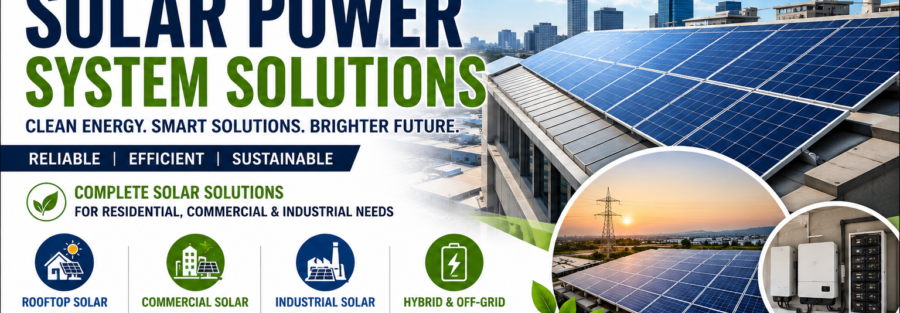
Different projects require different solar configurations. Metro Engineers Services can develop solutions according to the specific requirements of residential, commercial, and industrial customers.
- On-Grid Solar Power Systems
An on-grid solar system operates in conjunction with the electricity grid.
Solar panels generate electricity during available sunlight hours, while the building can continue to use grid electricity when solar generation is insufficient.
This type of system can be suitable for:
- Offices
- Commercial buildings
- Shops
- Schools
- Hospitals
- Residential properties
- Industrial facilities
The final configuration should be designed according to the property’s electricity consumption, sanctioned load, applicable regulations, and local utility requirements.
- Off-Grid Solar Power Systems
An off-grid system operates independently from the conventional electricity grid and typically incorporates battery storage.
Such systems may be useful for locations where grid connectivity is limited or unavailable.
Potential applications include:
- Remote facilities
- Rural infrastructure
- Remote industrial locations
- Farmhouses
- Communication infrastructure
- Isolated facilities
System capacity and battery sizing are particularly important in off-grid installations because the system must be designed around the expected energy demand and available solar resource.
- Hybrid Solar Power Systems
Hybrid systems combine solar generation with other power sources, such as grid electricity and battery storage.
They can provide greater flexibility by allowing energy to be generated, stored, and consumed according to project requirements.
Hybrid systems may be considered when customers want:
- Solar generation
- Backup power
- Battery storage
- Greater energy management flexibility
- Reduced dependence on grid electricity
Rooftop Solar Power Solutions
Rooftop solar is one of the most popular applications of photovoltaic technology because it makes productive use of existing building space.
A rooftop solar installation can be considered for:
- Homes
- Offices
- Factories
- Warehouses
- Hotels
- Schools
- Hospitals
- Commercial buildings
- Institutional facilities
Before installation, the roof should be assessed for structural suitability, available area, shading, orientation, accessibility, cable routing, and maintenance requirements.
A professional engineering approach helps ensure that the available rooftop space is used effectively.
Commercial Solar Power Systems
Commercial properties consume electricity for lighting, air conditioning, computers, elevators, machinery, refrigeration, security systems, and other equipment.
Installing a solar power system can help businesses manage a portion of their energy requirements while supporting their sustainability goals.
Potential commercial applications include:
- Corporate offices
- Retail stores
- Shopping complexes
- Hotels
- Restaurants
- Hospitals
- Schools
- Colleges
- Warehouses
- Business parks
Metro Engineers Services focuses on customized solutions rather than applying identical system designs to every property. The company’s solar service page specifically highlights customized, energy-efficient solutions for commercial buildings, residential projects, businesses, and industries.
Industrial Solar Power Solutions
Industrial facilities often have substantial electricity requirements due to machinery, production equipment, HVAC systems, pumps, compressors, lighting, and other industrial loads.
Solar power can become an important part of an industrial energy strategy.
Industrial solar projects require careful attention to:
- Load analysis
- Power quality
- Electrical infrastructure
- Available installation area
- Solar generation capacity
- Cable sizing
- Protection systems
- Earthing
- Integration with existing electrical systems
- Maintenance accessibility
A technically competent engineering partner is therefore essential for industrial solar projects.
Important Components of a Solar Power System
A solar power plant consists of multiple components that must work together efficiently.
Solar Panels
Solar PV modules capture sunlight and convert it into DC electricity.
Panel selection should consider factors such as:
- Efficiency
- Warranty
- Environmental conditions
- Available space
- Performance characteristics
- Project requirements
Solar Inverter
The inverter converts DC electricity generated by solar panels into AC electricity suitable for the building’s electrical system or grid connection.
Inverters are critical to system performance, monitoring, and electrical integration.
Mounting Structure
Solar panels require robust mounting structures designed for the specific installation environment.
For rooftop projects, the structure must be compatible with the roof and designed to withstand relevant environmental loads.
Cables and Electrical Protection
Solar installations require properly selected DC and AC cables along with appropriate protection equipment.
Good engineering practices help minimize electrical losses and improve system safety.
Earthing and Protection
Earthing is an important part of electrical safety. Solar installations should incorporate appropriate earthing and protection arrangements based on the system design and applicable standards.
Monitoring System
Modern solar installations can incorporate monitoring systems that provide information about system performance and energy generation.
Monitoring can help identify abnormal performance and support preventive maintenance.
Why Professional Solar System Design Matters
Solar installation should never be treated simply as a matter of placing panels on a roof.
A poorly designed system can result in:
- Lower-than-expected energy generation
- Shading losses
- Poor equipment selection
- Electrical losses
- Difficult maintenance
- Safety concerns
- Inefficient use of available space
Professional system design considers the entire energy ecosystem.
The engineering process should evaluate electricity consumption, solar potential, installation area, equipment specifications, electrical infrastructure, and future requirements.
This approach helps create a solar system that is technically appropriate and economically practical.
The Solar Power System Installation Process
A professional solar project typically involves several stages.
Step 1: Requirement Assessment
The first step is understanding the customer’s electricity consumption, objectives, available space, and budget.
Step 2: Site Survey
The site is evaluated for:
- Roof or land availability
- Shading
- Orientation
- Electrical infrastructure
- Cable routes
- Accessibility
- Installation conditions
Step 3: System Design
Engineers determine appropriate system capacity, equipment specifications, layout, and electrical configuration.
Step 4: Component Selection
Quality solar modules, inverters, mounting structures, cables, protection equipment, and other components are selected according to project requirements.
Step 5: Installation
The system is professionally installed, including mounting structures, solar modules, cabling, inverter installation, electrical connections, and protection systems.
Step 6: Testing
Electrical connections, protection systems, equipment functionality, and other critical parameters are checked before commissioning.
Step 7: Commissioning
Once the system passes the required checks, it is commissioned for operation.
Step 8: Monitoring and Maintenance
Ongoing maintenance and technical support help keep the system operating efficiently.
Metro Engineers Services states that its solar services cover the project lifecycle from consulting and system design through installation, commissioning, and maintenance.
Why Choose Metro Engineers Services for Solar Power System Solutions?
Choosing the right solar partner can make a significant difference to project performance and long-term value.
Metro Engineers Services offers several advantages.
- End-to-End Solar Solutions
The company provides support across multiple stages of the solar project instead of focusing solely on installation.
Its published solar service offering includes consulting, system design, installation, commissioning, and maintenance.
This provides customers with a more integrated project experience.
- Experienced Solar Energy Professionals
Solar projects require knowledge of electrical systems, energy requirements, installation practices, safety, and system integration.
Metro Engineers Services highlights experienced solar energy professionals as one of the reasons customers can choose its services.
- Customized Solutions
Every building and industrial facility has different electricity requirements.
Metro Engineers Services focuses on customized and energy-efficient solutions rather than treating every project in the same way.
A customized approach can help make better use of available space and align system design with actual power requirements.
- Focus on Energy Efficiency
The objective of a solar system is not simply to generate electricity but to generate it efficiently and reliably.
Metro Engineers Services emphasizes energy-efficient solar solutions designed around customer requirements.
- Quality Components and Technology
Solar systems are long-term infrastructure investments. The quality of panels, inverters, structures, cables, and protection equipment directly influences system reliability.
Metro Engineers Services states that it focuses on high-quality solar components and technology.
- Safety and Standards-Compliant Installation
Electrical safety is an essential consideration for every solar project.
Metro Engineers Services highlights safe and standards-compliant installations as part of its solar service approach.
Professional installation helps minimize electrical risks and supports reliable long-term operation.
- Maintenance and Technical Support
Installing a solar system is only the beginning.
Regular monitoring, inspections, cleaning where appropriate, electrical checks, fault diagnosis, and preventive maintenance can help maintain system performance.
Metro Engineers Services offers reliable maintenance and technical support as part of its solar solutions.
Solar Power for a Greener Future
The transition toward renewable energy is not only about reducing electricity expenses. It is also about creating a more sustainable energy ecosystem.
Businesses adopting solar power can strengthen their environmental initiatives while reducing their dependence on conventional electricity sources.
For industries and commercial organizations, solar energy can become part of a broader sustainability strategy that includes:
- Renewable energy adoption
- Energy efficiency
- Reduced electricity dependence
- Responsible resource utilization
- Sustainable infrastructure development
Metro Engineers Services describes its solar offering as being focused on long-term financial savings, environmental sustainability, and energy independence.
Solar Power Systems for Different Applications
One of the biggest advantages of solar technology is its flexibility.
Solar solutions can be designed for:
Residential Properties
Homes can use rooftop solar systems to generate electricity for daily requirements.
Commercial Buildings
Offices, shops, hotels, and other commercial properties can use solar to offset part of their electricity demand.
Industrial Facilities
Factories and warehouses with significant energy consumption can explore larger solar installations.
Educational Institutions
Schools and colleges can use solar power while also demonstrating renewable-energy technology to students.
Hospitals
Hospitals and healthcare facilities can consider solar as part of their broader energy strategy.
Infrastructure Projects
Solar systems can support various infrastructure applications, particularly where energy efficiency and renewable generation are priorities.
Why the Right Solar Partner Matters
Solar technology is increasingly accessible, but the quality of the project still depends heavily on engineering and execution.
The right solar partner should understand:
- Electrical requirements
- Solar system design
- Equipment selection
- Installation
- Safety
- Testing
- Commissioning
- Maintenance
- Long-term performance
Choosing solely on the basis of the lowest installation price can create problems later if equipment quality, engineering, or after-sales support is inadequate.
A professional solar company should instead focus on total project value, system performance, safety, reliability, and lifecycle cost.
Metro Engineers Services – A Reliable Partner for Solar Energy Infrastructure
Metro Engineers Services is positioned as an electrical construction and engineering company serving residential, commercial, and industrial projects. Its solar power offering is designed around clean, dependable, and economical energy generation, with an emphasis on sustainability and energy efficiency.
The company provides a complete approach that combines:
- Solar consultation
- System design
- Engineering
- Quality components
- Professional installation
- Testing
- Commissioning
- Maintenance
- Technical support
Its Jaipur office is located near Amrapali Circle, Vaishali Nagar, and the company lists +91-8440016116 and mesprojectjpr@gmail.com for contact.
For customers looking for a solar partner in Jaipur and surrounding areas, this integrated approach can simplify project execution while providing a single point of technical coordination.
Conclusion
Solar Power Systems are becoming an increasingly important solution for homes, businesses, commercial buildings, industries, and infrastructure projects seeking cleaner and more efficient energy generation.
However, successful solar implementation requires much more than purchasing solar panels. Proper system design, capacity planning, equipment selection, electrical integration, safe installation, testing, commissioning, monitoring, and maintenance all contribute to the long-term performance of a solar project.
Metro Engineers Services offers end-to-end Solar Power System solutions covering consultation, design, installation, commissioning, and maintenance. The company emphasizes customized and energy-efficient solutions, quality solar components, safe installations, and ongoing technical support.
Whether you are planning a rooftop solar installation, commercial solar project, industrial solar power system, or a customized renewable energy solution, selecting an experienced engineering partner is essential.
With its focus on engineering quality, sustainability, energy efficiency, and customer satisfaction, Metro Engineers Services can be a dependable choice for Solar Power System solutions in Jaipur.
If you are planning to switch toward solar energy or want to evaluate the right solar solution for your property, contact Metro Engineers Services to discuss your electricity requirements, site conditions, and project objectives.
Metro Engineers Services – Powering a Greener Tomorrow with Reliable Solar Power Solutions.